

The short version
Mardi Himal vs Khumai Danda vs Kapuche Lake compared for 2026: difficulty, days, altitude, crowds, cost and who each short Pokhara trek truly suits.
- Mardi Himal is the modern classic — the highest and most dramatic of the three, topping out at a 4,500m base camp with full Annapurna panoramas, but with the steepest final climb.
- Khumai Danda is the quiet ridge alternative — astonishingly close Machhapuchhre (Fishtail) views at about 3,245m, far fewer trekkers, and a gentler profile than Mardi.
- Kapuche Lake & Sikles is the easiest and lowest — the world's lowest glacial lake at about 2,546m, paired with the authentic Gurung village of Sikles, ideal for families and first-timers.
- All three use the same simple ACAP + TIMS permits, run from Pokhara in under a week, and are not restricted areas — so the choice comes down to altitude, fitness and the kind of view you want.
Three short treks near Pokhara have quietly become the most-asked-about trails in the Annapurna region, and we field the comparison almost every week: Mardi Himal, Khumai Danda and Kapuche Lake. As a Pokhara-based operator running these trails since 1998, our honest view is that there is no single winner — each one is the right answer for a different traveller. Mardi takes you highest and feels the most alpine; Khumai Danda trades a little altitude for solitude and the closest Fishtail views in the region; Kapuche is the gentlest, lowest and most cultural. This guide compares them head to head on difficulty, days, altitude, scenery, crowds, season, cost and — most importantly — who each one suits.


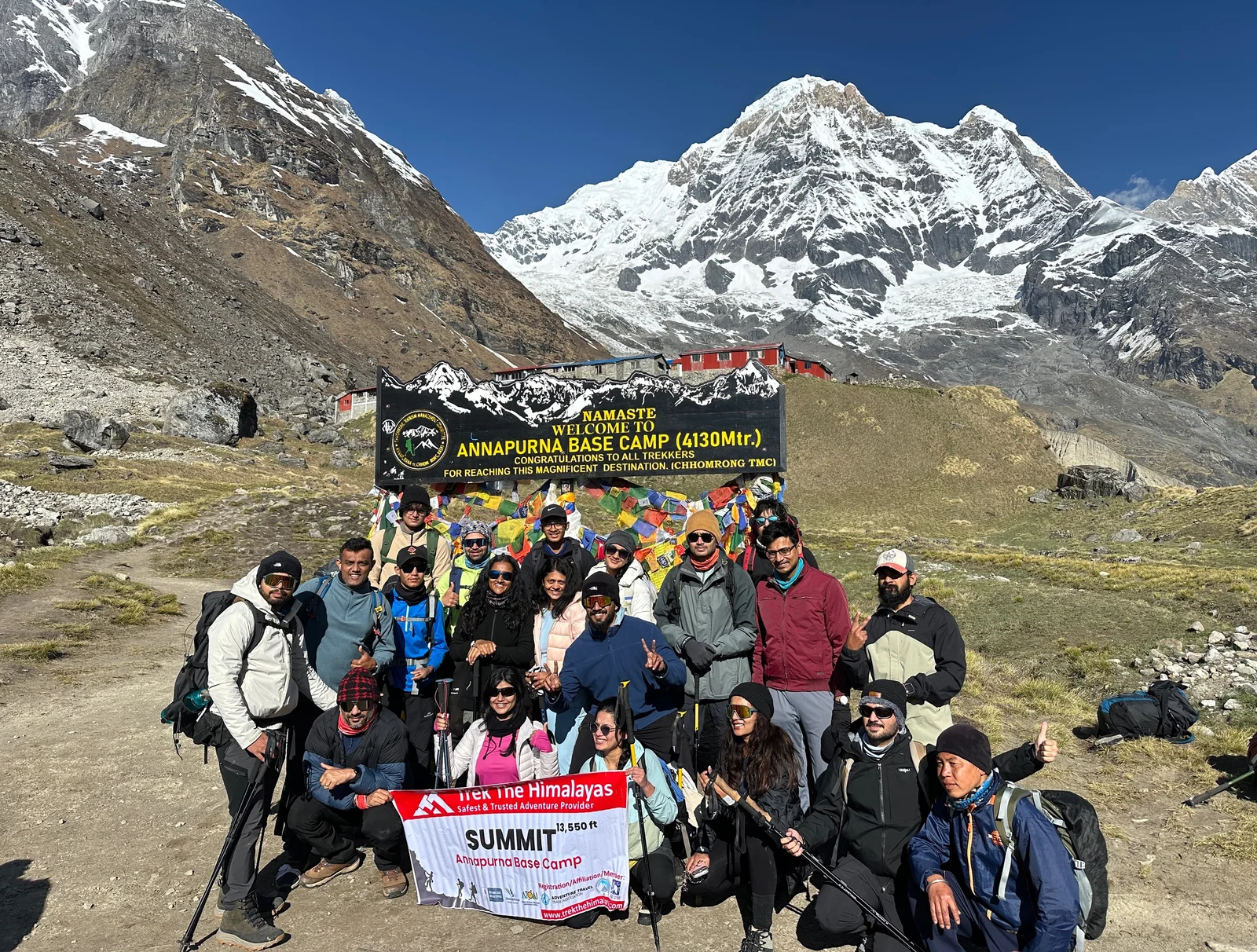
At a glance: the three treks compared
Here is the quick side-by-side before we get into the detail. All figures are typical guided ranges from Pokhara; your exact days depend on whether you add the higher viewpoints.
| Feature | Mardi Himal | Khumai Danda | Kapuche Lake & Sikles |
|---|---|---|---|
| Max altitude | ~4,500m (Base Camp); ~3,950m Upper View Point | ~3,245m ridge; ~3,700m optional Korchan viewpoint | ~2,546m (lake) |
| Typical duration | 4–7 days | 4–5 days | 4–5 days |
| Difficulty | Moderate (steep final day) | Moderate (steady ridge climbs) | Easy to moderate |
| Signature view | Wide Annapurna & Machhapuchhre panorama | Closest Fishtail face, Annapurna South, Lamjung | Turquoise glacial lake under sheer cliffs |
| Crowds | Busy in peak season | Quiet | Quiet, off the radar |
| Culture | Light (teahouse ridge) | Light (Gurung hamlets) | Strong (Sikles village) |
| Accommodation | Teahouse | Teahouse / basic lodge | Teahouse + one camp/basic night |
| Best for | Fit trekkers wanting altitude | Those wanting big views without crowds | Families, beginners, culture seekers |
Mardi Himal: the modern classic
Officially opened as a trail only in 2012, Mardi Himal has become the breakout short trek of the Annapurna region. You climb a forested ridge through rhododendron to Low Camp and High Camp (about 3,580m–3,700m), then push up to the Upper View Point at roughly 3,950m, with the option of continuing to the Mardi Himal Base Camp at around 4,500m. That base-camp morning is the highest and most exposed of all three treks here, and the reward is a sweeping wall of peaks — Machhapuchhre almost overhead, Annapurna South, Hiunchuli and Mardi Himal itself. If you want the most dramatic, genuinely alpine day out within a week of Pokhara, this is it. The trade-off is that it is also the busiest and the steepest, and the only one of the three where altitude needs real respect.
Khumai Danda: the quiet ridge with the closest Fishtail views
Khumai Danda is the locals' secret. Sitting at about 3,245m on a ridge directly beneath Machhapuchhre, it delivers what many trekkers come to the Annapurnas for — an enormous, close-up Fishtail face — but with a fraction of Mardi's foot traffic. A short drive from Pokhara to Ghachowk gets you onto the trail, and from the ridge you can hike higher to the Korchan viewpoint (around 3,700m) for sunrise over Annapurna South, Hiunchuli and Lamjung Himal. It is moderate rather than easy — there are sustained climbs through forest and pasture — but it never reaches the thin air of Mardi's base camp. We recommend Khumai Danda to trekkers who want a big-mountain experience and quiet trails over the prestige of a higher number. Read our dedicated Khumai Danda trek guide for the full route.
Kapuche Lake & Sikles: the easiest, lowest and most cultural
Kapuche is the gentle one — and the most unusual. At roughly 2,546m it is home to what is widely described as the world's lowest glacial lake, a startling turquoise pool fed by meltwater from Annapurna II, IV and Lamjung Himal and hemmed in by sheer cliffs. Because the high point is so low, this is the trek we steer families, older travellers and outright beginners toward. It is also the most culturally rich: the route runs through Sikles, one of the largest and most traditional Gurung villages in Nepal, where stone houses, terraced fields and homestay hospitality are part of the experience. Expect mostly teahouses with one simpler camp-style or basic night near the lake. Our full Kapuche Lake and Sikles guide covers the itinerary in detail.
Difficulty and fitness: how they really compare
All three are achievable for a reasonably active person with no technical skills, but the gap between them is real:
- Kapuche Lake — easiest. Short walking days of roughly 4–6 hours and a low maximum altitude make this suitable for fit beginners and well-prepared families.
- Khumai Danda — moderate. Steady ridge climbs and a couple of longer days, but altitude stays comfortable below 3,700m even at the optional viewpoint.
- Mardi Himal — moderate, with one genuinely hard day. The High Camp to Base Camp push gains serious elevation and crosses 4,000m, where some trekkers feel the altitude.
Whichever you choose, build up some hill walking beforehand. If you are weighing a Himalayan trek for the first time, our Nepal trek comparison hub puts these short trails in context against the bigger classics.
Altitude and safety
Altitude is the single biggest difference between the three. Kapuche, peaking around 2,546m, carries almost no acute-mountain-sickness risk for most people. Khumai Danda, at 3,245m (or 3,700m at Korchan), is high enough to notice but rarely a problem on a sensible schedule. Mardi Himal's 4,500m base camp is the one that demands attention — ascend gradually, hydrate, and turn back at the Upper View Point if you feel unwell rather than pushing to the top. We always brief our trekkers on the early signs of altitude sickness; for a primer, see our guide to altitude sickness prevention and treatment.
Permits and 2026 cost
The good news is that all three share the same simple permit set, and none of them lies in a restricted area. You need the Annapurna Conservation Area Permit (ACAP, NPR 3,000 for foreign nationals, tax included) plus a TIMS card (roughly NPR 2,000). Both can be arranged in Pokhara or online, and we handle them for you on a guided trip. For the wider picture, our Nepal trekking permits 2026 guide and the permits hub lay out every fee.
As a rough guide, expect guided packages from around US$320 to US$650 per person depending on the trek, group size and inclusions. Kapuche and Khumai Danda tend to sit at the lower end as short, lower trips; Mardi can cost a little more if you add the base-camp day. You can model your own budget with our Nepal trek cost calculator.
Best time to trek and how to get there
The two prime windows apply to all three: spring (March–May) for rhododendron blooms and warm days, and autumn (October–November) for the clearest skies and crispest mountain views. Winter is doable on Kapuche and Khumai Danda given their lower altitudes, though Mardi's high camps get cold and occasionally snowbound. Monsoon (June–August) brings cloud and leeches and is best avoided. See our best time to trek Nepal guide for month-by-month detail.
Getting there is part of the appeal — every one of these treks starts within a short drive of Pokhara, so there is no domestic flight or long approach. That makes them perfect add-ons to a Pokhara stay or a warm-up before a bigger objective. Explore the wider region in our Annapurna region guide.
Accommodation and packing
Mardi Himal and Khumai Danda are teahouse treks — simple lodges with shared dining, basic rooms and increasingly good food. Kapuche is mostly teahouse with one more rustic night near the lake, and Sikles offers genuine village homestays. In all cases keep your pack light: layers for cold mornings at altitude, a warm down or fleece, rain protection, sturdy boots, a headtorch and a reusable water bottle with purification. Our Nepal trekking packing list covers the full kit.
So which one should you choose?
Here is how we advise travellers in practice. Choose Mardi Himal if you are fit, want the highest viewpoint and the most alpine day, and do not mind sharing the trail. Choose Khumai Danda if you want enormous Fishtail views and peace and quiet, and would rather skip the 4,000m+ effort. Choose Kapuche Lake and Sikles if you are trekking with family, are new to the Himalayas, or want the richest cultural experience at the lowest, easiest altitude. Many of our guests who fall in love with one come back for the others — they pair beautifully across a single trip. When you are ready, browse the full Mardi Himal trek, Khumai Danda trek and Kapuche Lake & Sikles trek itineraries, and we will help you pick.
Which of the three treks is the easiest?
Kapuche Lake and Sikles is the easiest, with the lowest maximum altitude (about 2,546m) and short walking days, making it well suited to families and beginners. Khumai Danda is moderate, and Mardi Himal is the most demanding because of its 4,500m base camp.
Which has the best mountain views?
It depends on what you want. Mardi Himal gives the widest, highest panorama from its 4,500m base camp, while Khumai Danda offers the closest face-on views of Machhapuchhre (Fishtail). Kapuche's highlight is the glacial lake itself rather than a summit panorama.
Do I need special permits for any of them?
No. All three sit inside the Annapurna Conservation Area and are not restricted zones. You need an ACAP permit (NPR 3,000 for foreigners) and a TIMS card (around NPR 2,000), both of which we arrange for guided trips.
Can I combine two or three of these treks in one trip?
Yes, and many travellers do. Because all three start near Pokhara and run in under a week each, they combine well — for example Kapuche as a gentle warm-up followed by Mardi Himal for the higher finale.
When is the best time to do these treks?
Spring (March–May) and autumn (October–November) are ideal for all three, offering stable weather and clear views. Kapuche and Khumai Danda are also feasible in winter thanks to their lower altitude, while Mardi's high camps can be cold and snowy.
Are they suitable for first-time trekkers?
Kapuche Lake is excellent for first-timers, and Khumai Danda is very manageable for anyone reasonably fit. Mardi Himal is achievable for beginners too but requires a sensible pace on the final day because of the altitude — going with a guide makes it far easier.
Private Annapurna departures on any date, hand-picked NMA guides, and 25+ years on these trails. Tell us your dates — we usually reply within a few hours.
Browse Annapurna treks & tours → Read the Annapurna guide →
Written by
Travel Himalaya NepalPokhara-based, NMA-certified trekking guides. We’ve led 5,000+ treks across the Annapurna and Everest regions since 1998 — every word here comes from the trail. More from this author →
Share this article
Ready to Trek?
From reading about it to standing on it
Our Pokhara-based guides have been doing this since 1998. Tell us your dates and fitness level — we'll build your perfect itinerary. Free, no obligation.
Why trek with our licensed agencyMore guides like this
Popular trips to consider
Free Trekker's Insider Guide
Permits, packing lists, cost breakdowns — no fluff.
We send one useful email. You can unsubscribe anytime.