
The short version
Langtang is Nepal's most accessible wilderness trek — 3 hours from Kathmandu, dramatic Himalayan scenery, and far fewer trekkers than Annapurna or Everest. Here's everything for 2026.
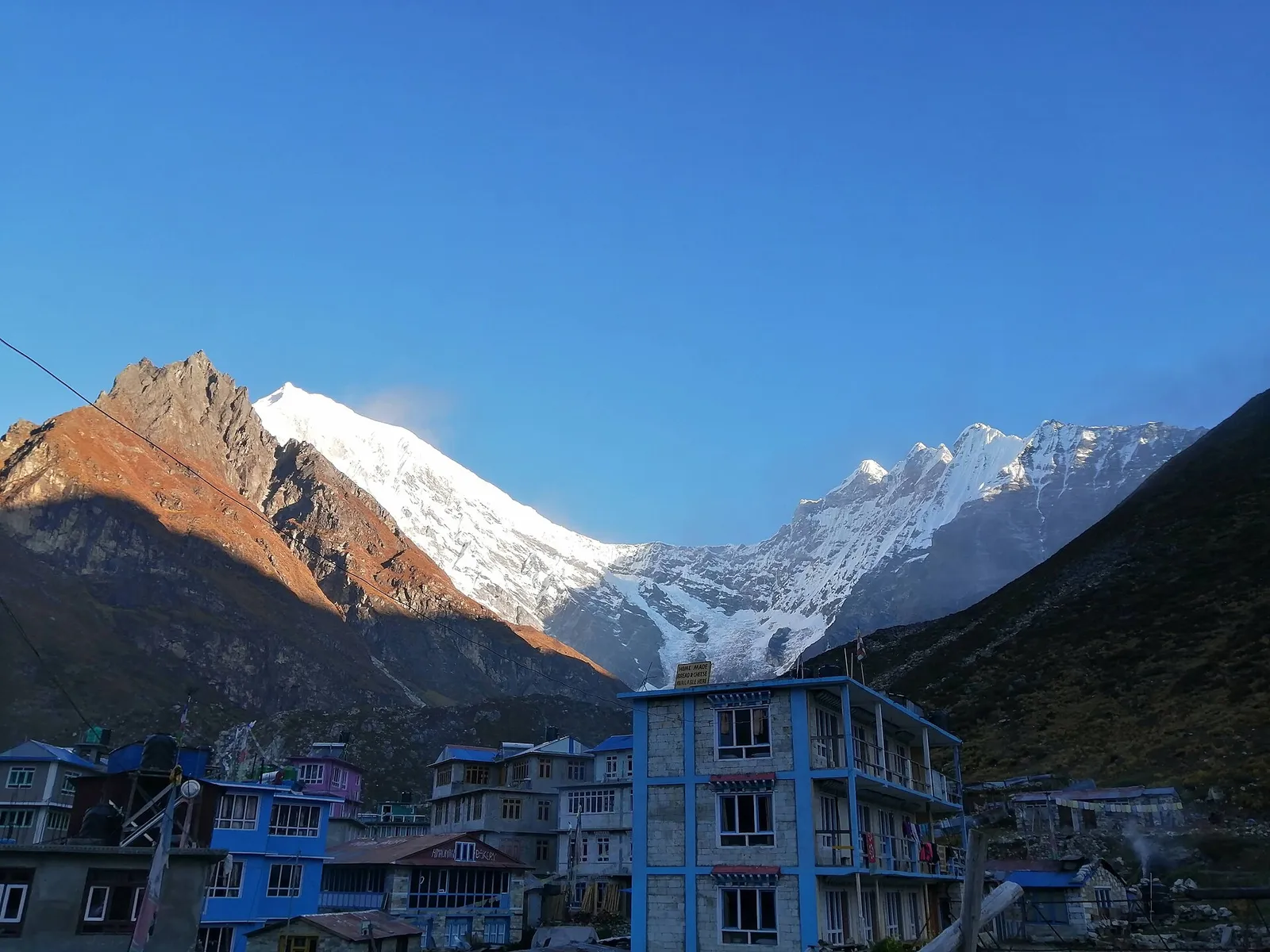
Langtang Valley sits just a few hours north of Kathmandu, yet it feels like another world — a deep, glaciated gorge flanked by 7,000-metre peaks, yak pastures, ancient monasteries and teahouses run by Tamang families. The 2015 earthquake buried Langtang village beneath an avalanche, killing hundreds of trekkers and locals. What has emerged from that tragedy is a rebuilt, resilient community whose warmth is tangible at every lodge. Trekking here in 2026 is not just an adventure — it is a small act of solidarity with a people who chose to stay and rebuild.


- Length: 7–10 days, no technical climbing — the classic route runs Syabrubesi to Kyanjin Gompa and back.
- Cost of permits: roughly USD 35–40 (Langtang National Park NPR 3,000 + TIMS NPR 1,000) — the cheapest of any major Nepal trek.
- Guide: as of 2026 a licensed guide booked through a registered agency is required in Langtang — solo permits are no longer issued here.
- Getting there: 6–8 hours by road from Kathmandu to Syabrubesi (1,460 m). No flight needed.
- Best months: March–May and October–November.
Trek Overview
The classic Langtang Valley trek runs 7 to 10 days and requires no technical climbing. The trail begins at Syabrubesi (1,462 m), a market town reachable by road from Kathmandu, and climbs steadily through rhododendron and bamboo forest to Kyanjin Gompa (3,870 m) at the head of the valley. From Kyanjin, strong trekkers add the ascent of Tsergo Ri (4,984 m) for a 360-degree panorama that takes in Langtang Lirung, Dorje Lakpa and the Tibetan plateau to the north. The return follows the same valley, which reveals new angles of light on the way down.
If you want the fuller picture of the region — neighbouring Gosaikunda, the Tamang Heritage Trail, and seasonal detail — our Langtang regional guide goes deeper than we can here.
The Tamang Heritage & Post-Earthquake Recovery
Langtang is Tamang country. The Tamang are a Tibetan-Buddhist people whose villages, prayer walls and gompas give the valley its character — and whose hospitality defines the trek. When the April 2015 earthquake triggered an avalanche of ice and rock that obliterated old Langtang village, the community lost homes, family and livelihood in a matter of seconds.
What you walk through today is a deliberate rebuild. Lodges were reconstructed on safer ground, a memorial of inscribed stones stands where the village once was, and tourism is the economic engine that keeps families in the valley rather than migrating to Kathmandu. We were among the first agencies back on the trail after 2015, and every booking funnels income directly to the Tamang households who run the teahouses.
Allow time to sit at the earthquake memorial above Langtang village. It is quietly devastating — a wall of stones inscribed with the names of those lost. Our guides, several of whom have personal ties to the valley, can tell you the story properly.
Highlights
The glacier-draped peak that dominates the valley and catches every sunset in amber and rose.
The cheese factory, established with Swiss development aid, makes a sharp semi-hard cheese you can buy by the wheel. The butter tea is equally memorable.
A working Tibetan Buddhist monastery with a prayer-wheel corridor and resident monks who welcome respectful visitors.
The moraine walk above Kyanjin gives close-up views of the Langtang Glacier without a crampon in sight.
Permits & Costs (2026)
Langtang remains the most affordable of Nepal's major treks for permits. You need two documents, both obtained in Kathmandu through a registered agency:
| Permit | Cost (foreign national) | Where |
|---|---|---|
| Langtang National Park entry | NPR 3,000 (~USD 27, incl. VAT) | NTB office, Kathmandu or Dhunche checkpoint |
| TIMS card (agency-issued) | NPR 1,000 (~USD 8) | Through your registered agency |
| Total | ~NPR 4,000 / USD 35–40 | — |
SAARC nationals pay reduced rates (park entry NPR 1,500, TIMS NPR 300). There are no restricted-area permits and no daily fee ceiling. For a full breakdown of Nepal's permit system see the Nepal Tourism Board park-fee schedule and our permits hub.
Since April 2023 — and fully enforced now — every foreign trekker in Nepal's national parks must trek with a licensed guide booked through a registered agency. The old green "independent" TIMS card no longer exists, and solo Langtang permits are no longer issued. TIMS is also checked more consistently in Langtang than in Everest or Annapurna. This is a genuine change from pre-2023 advice you may still see online.
Getting There
Syabrubesi is 120 km north of Kathmandu — no domestic flight required, which is part of why Langtang is so accessible and affordable next to Everest or the Annapurna Circuit.
The tourist bus departs Kathmandu's Machhapokhari park around 7:00 am daily — scenic but bumpy after Dhunche. A shared jeep is faster; a private jeep is door-to-door from your hotel and the most comfortable option.
Route Day-by-Day
- Day 1 — Kathmandu to Syabrubesi (7–8h drive). Arrive, rest, finalise permits.
- Day 2 — Syabrubesi (1,462 m) to Lama Hotel (2,380 m). 5–6h through river gorge and forest. First rhododendron blooms in spring.
- Day 3 — Lama Hotel to Langtang Village (3,430 m). 5h. The valley opens dramatically; pass the earthquake memorial.
- Day 4 — Langtang Village to Kyanjin Gompa (3,870 m). 2–3h easy walk. Afternoon monastery visit and cheese-factory tour.
- Day 5 — Acclimatisation at Kyanjin. Morning hike to Kyanjin Ri (4,773 m) or begin the Tsergo Ri ascent.
- Day 6 — Tsergo Ri (4,984 m) summit and return to Kyanjin. 6–8h round trip — arguably the best viewpoint in the region.
- Days 7–8 — Return to Syabrubesi via Lama Hotel, then drive back to Kathmandu.
The jump from Lama Hotel to Kyanjin gains altitude fast. Build in the Day 5 rest at Kyanjin before Tsergo Ri, hydrate, and know the warning signs. See our guide to altitude sickness prevention.
Best Season
| Window | What to expect |
|---|---|
| March–May (Spring) | Rhododendrons in full bloom below 3,500 m, stable weather, best for photography. |
| Oct–Nov (Autumn) | Crystal-clear post-monsoon skies, excellent mountain views, busiest period. |
| Dec–Feb (Winter) | Cold at Kyanjin (−15°C nights) but walkable below the snowline. Far fewer trekkers. |
| Jun–Aug (Monsoon) | Avoid — leeches on the lower trail, landslide risk on the road, low visibility. |
For a full month-by-month view, see our best time to trek Nepal in 2026 guide.
Accommodation & Food
Teahouses line the entire route. Expect to pay $8–20 per night for a twin room — lodges often discount the room if you eat dinner and breakfast there, so always ask. Food is standard trekking fare: dal bhat, pasta, fried rice, soups. Kyanjin stands out for its yak-cheese omelettes, yak steak and locally made butter tea that warms you from the inside out.
Solar electricity is reliable as far as Lama Hotel; above that, carry a power bank. Ncell phone signal exists sporadically up to Kyanjin, and most Kyanjin lodges offer Wi-Fi for a small fee.
With a Guide
Under the 2026 rules a licensed guide is no longer optional in Langtang — but beyond the legal requirement, a good guide genuinely transforms the trek:
- Access to the yak-cheese factory beyond the public area
- Introductions to monks at Kyanjin Gompa for a proper monastery tour
- The earthquake history told by someone with a personal connection to the valley
- Safety judgement on Tsergo Ri in fast-changing weather
Browse our Langtang guide profiles to meet the team before you book.
Is a guide mandatory for the Langtang trek in 2026?
Yes. Since the April 2023 policy, every foreign trekker in Nepal's national parks must trek with a licensed guide booked through a registered agency, and this is now fully enforced. Langtang permits are only issued to agency-guided trekkers — independent (green) TIMS cards no longer exist.
How much do Langtang permits cost?
About USD 35–40 in total for foreign nationals: the Langtang National Park entry permit (NPR 3,000, ~USD 27) plus the agency-issued TIMS card (NPR 1,000, ~USD 8). SAARC nationals pay less. It is the cheapest permit set of any major Nepal trek.
How fit do I need to be?
Moderate fitness is enough for the valley itself — most days are 4–6 hours of walking with steady ascent. The optional Tsergo Ri summit (4,984 m) is a tougher 6–8 hour day, so the rest day at Kyanjin matters for acclimatisation.
Do I need to fly to start the Langtang trek?
No. Syabrubesi, the trailhead, is reached entirely by road from Kathmandu (6–8 hours). This is a major reason Langtang is more affordable and accessible than Everest or Annapurna.
When is the best time to trek Langtang?
March–May for rhododendron blooms and stable weather, or October–November for the clearest mountain views. Avoid the June–August monsoon. Winter is feasible below the snowline for those who don't mind the cold.
How is Langtang since the 2015 earthquake?
Fully reopened and rebuilt. Lodges were reconstructed on safer ground, the trail is well-maintained, and the Tamang community relies on trekking tourism. Visiting is one of the most direct ways to support the valley's recovery.
We have run Langtang treks since 1998 and were among the first agencies back in the valley after the 2015 earthquake. Our 7-day Langtang Valley Trek includes all permits, airport transfers, Kathmandu accommodation and a certified Tamang-speaking guide. Custom 6-day or Gosaikunda extensions are available.
View the 7-day Langtang Valley Trek →Ready to Trek Langtang?
Langtang is the trek we recommend most often to first-time Nepal visitors who want genuine wilderness without the crowds or complexity of Everest Base Camp. It is accessible, affordable, culturally rich and quietly profound. The valley remembers 2015 — and so will you. Get in touch to start planning, or browse all our treks to compare.
Private Langtang departures on any date, hand-picked NMA guides, and 25+ years on these trails. Tell us your dates — we usually reply within a few hours.
Browse Langtang treks & tours → Read the Langtang guide →
Written by
Travel Himalaya NepalPokhara-based, NMA-certified trekking guides. We’ve led 5,000+ treks across the Annapurna and Everest regions since 1998 — every word here comes from the trail. More from this author →
Share this article
Ready to Trek?
From reading about it to standing on it
Our Pokhara-based guides have been doing this since 1998. Tell us your dates and fitness level — we'll build your perfect itinerary. Free, no obligation.
Why trek with our licensed agencyMore guides like this
Popular trips to consider
Free Trekker's Insider Guide
Permits, packing lists, cost breakdowns — no fluff.
We send one useful email. You can unsubscribe anytime.