
The short version
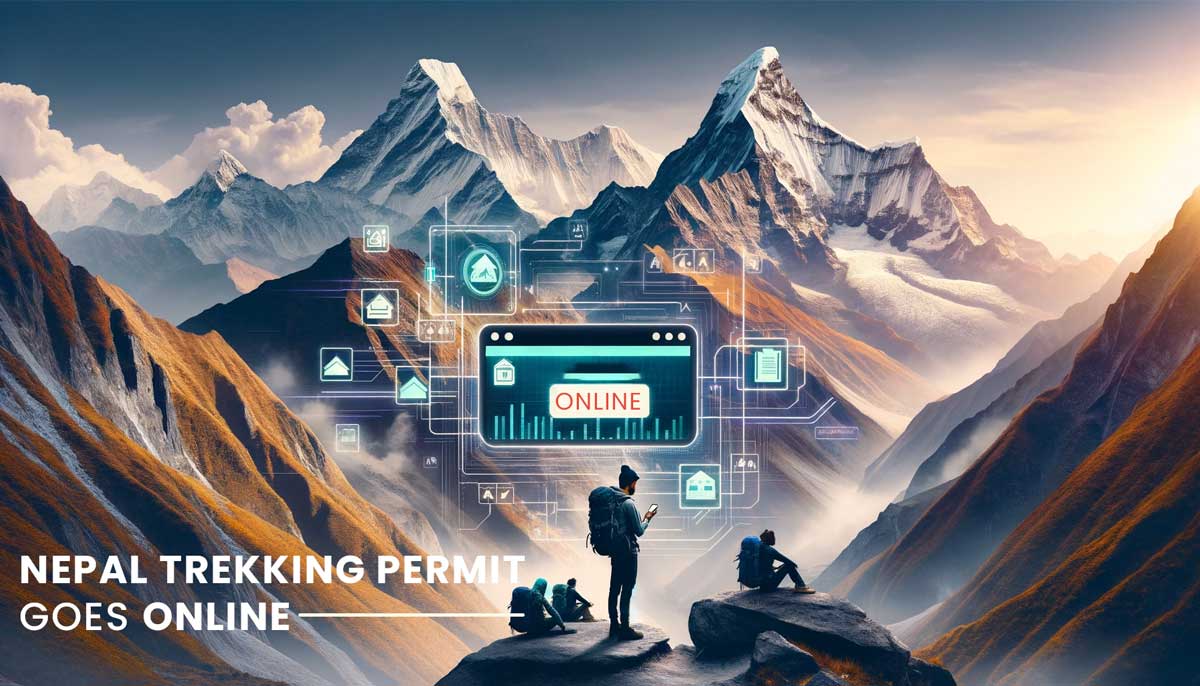
Welcome, trekkers! Nepal, the land of soaring Himalayas and breathtaking landscapes, has recently undergone a significant change in its trekking permit system. Embracing digitalization, the government has shifted from the traditional paper-based system to a convenient online platform. This blog delves into the details of this transition, offering you valuable information and insights. Key Takeaways: […]
Nepal's trekking permit system has come a long way since it first went paperless in February 2024. As of 2026 it is a genuinely online platform: you can apply with nothing more than your visa Application Submission ID, pay in advance, and — following the landmark rule change of March 2026 — even apply for restricted-area permits as a solo trekker. Here is exactly how the system works now, what it costs, and how we at Travel Himalaya Nepal handle it for you.
- Permits are fully online — TIMS is now an e-TIMS digital QR linked to your passport; the old paper card and the independent "Green" card are retired.
- A licensed guide booked through a registered agency is mandatory for foreigners in every national park, conservation area and restricted region (rule in force since 1 April 2023).
- Since 22 March 2026, solo foreigners can hold restricted-area permits individually — but still only through a registered agency with a guide.
- Standard permits issue in about 1 day; restricted-area permits need 5–7 working days lead time.
- You can now apply using your visa Application Submission ID and pay in advance — no need to be in Nepal first.
When the Department of Immigration switched restricted-area permits online on 23 February 2024, it was the first real step away from a queue-and-paperwork era that had barely changed in decades. Two years on, the digital system covers the full permit stack — TIMS, conservation-area and national-park entry, and the special Restricted Area Permits (RAP) — and the 2026 reforms have made it dramatically friendlier to plan around.
What changed for 2026
The Trekkers' Information Management System is now a digital QR code tied to your passport and itinerary. The physical card — including the independent "Green" TIMS — has been discontinued, so there is no longer a legal route to trek the major trails without a registered agency.
From 22 March 2026 the Department of Immigration dropped the long-standing two-person minimum for restricted areas. A single foreigner can now hold a RAP for Manaslu, Tsum Valley, Upper Mustang, Dolpo or Kanchenjunga — provided they trek with a licensed guide booked through a registered company.
You no longer need a finalised Nepali visa number. Your visa Application Submission ID is enough to start a permit application and pay fees in advance, which makes advance planning genuinely possible for the first time.
The rule introduced on 1 April 2023 is fully enforced in 2026: every non-Nepali trekking in a national park, conservation area or restricted region must be accompanied by a licensed guide or porter-guide from a government-registered agency.
"Online" does not mean "do-it-yourself". Restricted-area permits and e-TIMS are still issued through a registered trekking agency — the digital system speeds up our paperwork, it does not remove the agency requirement for foreigners.
The three permit layers
Almost every Nepal trek needs a combination of these. Knowing which layer applies to your route tells you what you will actually pay.
- TIMS (e-TIMS): the trekkers' registration system — required on most trekking routes for safety tracking. Now a digital QR.
- Conservation Area / National Park entry: e.g. ACAP for Annapurna, Sagarmatha National Park for Everest, Langtang National Park for Langtang.
- Restricted Area Permit (RAP): only for sensitive border regions such as Upper Mustang, Upper Dolpo, Manaslu, Tsum Valley, Kanchenjunga and Humla. Priced per week or per day.
Standard permit costs (2026)
| Permit | Foreigner | SAARC national |
|---|---|---|
| TIMS (e-TIMS) | NPR 2,000 | NPR 1,000 |
| ACAP — Annapurna Conservation Area | NPR 3,000 | NPR 1,000 |
| Sagarmatha (Everest) National Park | NPR 3,000 + 13% VAT | NPR 1,500 |
| Langtang National Park | NPR 3,000 + 13% VAT | NPR 1,500 |
| Khumbu Pasang Lhamu Rural Municipality fee | NPR 3,000 | NPR 3,000 |
For the popular non-restricted routes this is the whole bill: an Annapurna Base Camp trek or Ghorepani Poon Hill needs only ACAP + TIMS, and Everest Base Camp needs Sagarmatha + the Khumbu municipality fee (TIMS is no longer checked inside Khumbu). See our full ACAP + TIMS guide and Everest permit guide for the route-by-route detail.
Restricted Area Permit fees
These are set in US dollars by the Department of Immigration and are payable on top of TIMS and any conservation-area entry. The figures below have held steady since the online switch.
| Restricted area | Fee |
|---|---|
| Upper Mustang / Upper Dolpo | USD 500 for first 10 days, then USD 50/day |
| Manaslu (Gorkha) — Autumn, Sep–Nov | USD 100/week, then USD 15/day |
| Manaslu (Gorkha) — off-season | USD 75/week, then USD 10/day |
| Tsum Valley (Gorkha) — Autumn | USD 40/week, then USD 7/day |
| Tsum Valley (Gorkha) — off-season | USD 30/week, then USD 7/day |
| Bajhang / Darchula | USD 90/week, then USD 15/day |
| Humla | USD 50/week, then USD 10/day |
| Taplejung / Lower Dolpo / Dolakha / Sankhuwasabha / Solukhumbu / Rasuwa | USD 23/week |
The Manaslu Circuit is the headline beneficiary of the solo rule change — see our Manaslu Circuit Trek and the Manaslu region guide for what the RAP plus MCAP and ACAP combination looks like in practice.
Permit fees on the government portal are still settled through Nepali channels — mobile banking, Connect IPS, eSewa and Khalti. Foreign-card advance payment via the Application Submission ID is rolling out but not universal. In practice, your agency pays the fees on your behalf and bills them in your trip cost, so you never have to wrangle a Nepali wallet.
How the process works today
- Choose your route and dates first. Restricted-area permits are issued against a fixed itinerary and entry/exit points.
- Send us your documents. Passport scan, passport photos, your Nepal visa or Application Submission ID, and travel insurance covering high-altitude trekking and evacuation.
- We file online. As a registered agency we lodge the e-TIMS, conservation-area entry and any RAP through the official portals and pay the fees.
- You collect or carry digital. Standard permits are typically issued within a day; RAPs want 5–7 working days, so we ask for restricted-area documents well ahead of your start date.
Apply at least two weeks out for standard treks and three to four weeks out for restricted areas. The online system is fast, but visa-ID verification and the 5–7 working-day RAP window can still bite a tight schedule. If your dates straddle the autumn/off-season fee boundary for Manaslu or Tsum, tell us — the start date determines the rate.
Which treks need which permits
| Trek | Permits required |
|---|---|
| Annapurna Base Camp | ACAP + e-TIMS |
| Annapurna Circuit | ACAP + e-TIMS |
| Everest Base Camp | Sagarmatha NP + Khumbu municipality fee |
| Langtang Valley | Langtang NP + e-TIMS |
| Manaslu Circuit | Manaslu RAP + MCAP + ACAP |
Restricted areas worth the extra permit
The paperwork exists because these regions are culturally and ecologically sensitive — and that is exactly why they are so rewarding.
- Upper Mustang: the former "Lost Kingdom" of Lo, with walled Tibetan-Buddhist towns, cave monasteries and an arid, otherworldly landscape behind the Annapurnas.
- Upper Dolpo: remote high-desert valleys, the turquoise Phoksundo Lake and a living Bon and Tibetan culture rarely touched by mass tourism.
- Manaslu & Tsum Valley: a teahouse circuit around the world's eighth-highest peak, with the sacred, hidden Tsum Valley branching off into pure Himalayan-Buddhist country.
- Humla: far-western Nepal on the old salt-trade route to Mount Kailash, rugged and culturally distinct.
Frequently asked questions
Can I now trek solo in Nepal without an agency?
No. Since 22 March 2026 a solo foreigner can hold a restricted-area permit individually, and the old two-person minimum is gone — but a licensed guide booked through a government-registered agency is still mandatory across national parks, conservation areas and restricted regions. The e-TIMS and RAP systems will not issue a foreigner a permit outside a registered agency.
How long does an online permit take to issue?
Standard permits (TIMS, ACAP, Sagarmatha) are usually issued within about one day. Restricted Area Permits require 5–7 working days, so we ask for your documents three to four weeks before a restricted trek to keep your start date safe.
Do I still need a paper TIMS card?
No. TIMS is now e-TIMS — a digital QR code linked to your passport and itinerary. The physical card, including the independent "Green" version, has been discontinued.
Can I pay permit fees with a foreign card?
Advance payment via your visa Application Submission ID is being rolled out, but the government portal still leans on Nepali channels (Connect IPS, eSewa, Khalti). In practice your agency pays the fees and includes them in your trip cost, so you never need a Nepali payment app.
What documents do I need to apply?
A passport valid for your travel dates, passport-size photos, your Nepal visa or visa Application Submission ID, a fixed itinerary, and travel insurance that covers high-altitude trekking and helicopter evacuation.
What happens if I change my itinerary after the permit is issued?
Restricted-area permits are tied to fixed routes and dates, so changes are discouraged and may incur additional fees. Contact us before you alter anything — we can advise whether an amendment is possible.
We are an NMA-certified, government-registered agency — TIMS, conservation entry and restricted-area permits are all filed and paid by our office before you arrive. Compare fees and requirements for every region in one place.
See all Nepal trekking permits →For official confirmation, always cross-check the latest fees with the Department of Immigration and the Trekking Agencies Association of Nepal (TAAN), or simply ask our team — we keep on top of every rule change so you do not have to. Planning further afield? Our best time to trek Nepal in 2026 and Nepal visa guide round out your pre-trip checklist.
Please note that this blog provides information based on available sources at the time of writing. It is strongly recommended to visit the official website of the Department of Immigration Nepal or contact a reputable trekking agency for the latest updates and regulations. Other Sources: TAAN (Trekking Agencies Association of Nepal).


Private departures on any date, hand-picked NMA guides, and 25+ years on the trail. Tell us your dates — we usually reply within a few hours.
Browse all treks & tours →
Written by
Travel Himalaya NepalPokhara-based, NMA-certified trekking guides. We’ve led 5,000+ treks across the Annapurna and Everest regions since 1998 — every word here comes from the trail. More from this author →
Share this article
Ready to Trek?
From reading about it to standing on it
Our Pokhara-based guides have been doing this since 1998. Tell us your dates and fitness level — we'll build your perfect itinerary. Free, no obligation.
Why trek with our licensed agencyMore guides like this
Popular trips to consider
View all treks & toursFree Trekker's Insider Guide
Permits, packing lists, cost breakdowns — no fluff.
We send one useful email. You can unsubscribe anytime.