
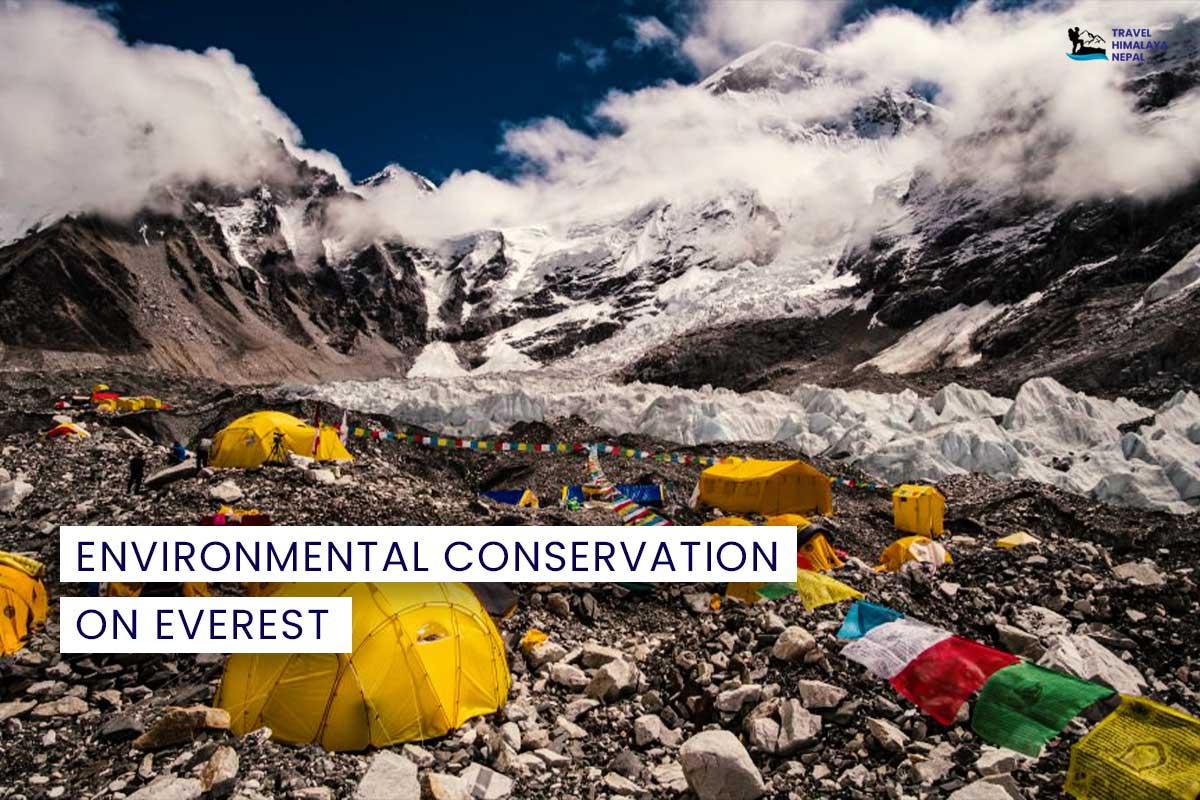
The short version
For countless adventurers, Mount Everest stands as the ultimate challenge. Its snow-capped peak, piercing the thin air at 29,031 feet (8,848.86 meters), beckons with a promise of unparalleled accomplishment. The dream of scaling Everest, of standing atop the world, is a powerful one. However, alongside the allure of this iconic mountain lies a growing concern […]
Mount Everest – Sagarmatha, the “Forehead of the Sky” – rises to 8,848.86 metres (29,031 ft), and every season it draws thousands of climbers and tens of thousands of trekkers to the Khumbu. That love comes at a cost. After more than two decades guiding in this region, we have watched the mountain change, and we have watched Nepal fight back with some of the toughest waste rules on any peak in the world. This is what is really happening on Everest in 2026, and how every trekker and climber can be part of the solution.


- Each climber leaves roughly 8 kg of waste; over 12,000 kg is abandoned on the mountain every year.
- Since 2024–25, climbers above Base Camp must carry their own human waste back down in official biodegradable poop bags – a hard rule, not a suggestion.
- A mandatory 8 kg waste-return rule per climber is now enforced, on top of the long-standing SPCC deposit system.
- The Everest climbing permit rose to US$15,000 (spring 2025), partly funding clean-up and high-altitude worker welfare.
- EBC trekkers don’t climb, but still need two permits and should trek with operators who pack out waste – like our 14-day Everest Base Camp trek.
The summit of Everest represents the pinnacle of human achievement – a testament to strength and determination. But this success comes at a cost. The harsh environment, coupled with a rising number of climbers, has created a serious environmental burden. This article explains the impact of human activity on Everest, the conservation efforts fighting back, and the path forward for a more sustainable future for this legendary peak.
How climbers and trekkers impact Everest
Everest’s ecosystem is fragile, slow to recover, and increasingly crowded. The pressures fall into four broad areas.
Food packaging, broken climbing gear and empty oxygen canisters litter the slopes. At extreme altitude, descending with rubbish is brutally hard, so climbers historically left gear behind. It is estimated each climber generates around 8 kg of waste, with over 12,000 kg left behind annually.
Improper disposal at high camps, particularly in the snow, can contaminate snowmelt and water sources downstream. With up to ~15,000 kg of human waste produced on the upper mountain each year, this is now Nepal’s single biggest enforcement focus.
Kerosene used for cooking and heating at base and high camps creates localised air pollution. While the vastness of the Himalaya dilutes the effect, soot deposited on snow accelerates melt.
Surging numbers stress the ecosystem. Constant foot traffic tramples slow-growing vegetation, disrupts wildlife habitat, and intensifies competition for water and shelter in peak season.
The extreme conditions above Base Camp make carrying anything down – including your own waste – physically gruelling. That is exactly why Nepal moved from voluntary “pack it out” ethics to legally enforced, deposit-backed rules.
Nepal’s 2026 waste rules: no longer optional
Conservation on Everest used to rely on goodwill. It no longer does. From the 2024–25 season onward, the Khumbu Pasang Lhamu Rural Municipality and the Sagarmatha Pollution Control Committee (SPCC) introduced binding rules with real teeth.
- Mandatory poop bags. Climbers above Base Camp must carry their human waste back down using official biodegradable, odour-neutralising bags issued by the municipality and SPCC. Climbers can no longer rely solely on their own bags – the issued bags are tracked and must be returned. “Our mountains have begun to stink,” said Mingma Sherpa, chairman of Pasang Lhamu Rural Municipality, citing complaints of human stool visible on rocks and climbers falling sick.
- 8 kg waste-return mandate. Each climber must bring back a set quota of waste (around 8 kg) in addition to their own rubbish, formalising the “pack it out” principle into a measurable, enforced requirement.
- SPCC garbage deposit. Expeditions still post a refundable garbage deposit, returned only if they bring their waste back down – a financial incentive that has been in place for years and remains central.
- Icefall & route fees. Climbers pay route-management fees (including an Icefall fee reported around US$600) that fund the Icefall Doctors and waste infrastructure.
What it now costs – permits and royalties (2026)
In September 2025 Nepal enforced its first major climbing-royalty hike in a decade, explicitly to fund garbage management, worker social security and conservation. Note the clear distinction between climbing Everest and trekking to Base Camp – the costs are worlds apart.
| Permit / fee | Cost (2026) | Applies to |
|---|---|---|
| Everest climbing permit (spring) | US$15,000 | Summit climbers, Mar–May |
| Everest climbing permit (autumn) | US$7,500 | Summit climbers, Sep–Nov |
| Everest climbing permit (winter/monsoon) | US$3,750 | Summit climbers, off-season |
| Sagarmatha National Park entry | ~NPR 3,000 (~US$22) | All EBC trekkers |
| Khumbu Pasang Lhamu Rural Municipality | ~NPR 3,000 (~US$23) | All EBC trekkers |
If you are walking to Base Camp rather than climbing the peak, you do not pay the US$15,000 royalty. You need two permits – the Sagarmatha National Park entry and the Khumbu Pasang Lhamu Rural Municipality permit, about US$45 combined. TIMS is not currently required on the standard Lukla–EBC route. See our full Everest Base Camp permit guide.
Conservation efforts on Everest
The challenges are significant, but a growing movement is dedicated to protecting this peak. The two most important institutions on the ground are the Everest Clean Up Campaign and the SPCC.
Cleaning up the past, protecting the future
One of the most visible initiatives is the Everest Clean Up Campaign. Launched in 2008, it tackles the mountain’s existing waste problem. Teams of dedicated climbers and Sherpas remove accumulated trash from points across the mountain. The results are striking – the 2018 campaign alone collected a staggering 38,905 kg (85,773 lbs) of waste. These clean-up expeditions restore Everest’s beauty and safeguard the ecosystem from long-term harm. Many are led by Sherpas who risk the Khumbu Icefall to retrieve decades-old debris and the bodies of fallen climbers.
The Sagarmatha Pollution Control Committee (SPCC)
Established in 1991, the SPCC coordinates and implements conservation on Everest. The committee focuses on waste-management strategies, minimising waste at the source and building efficient disposal methods. Initiatives include composting toilets at Base Camp – significantly reducing the risk of human waste contaminating water supplies – and waste segregation at Base Camp, enabling recycling and responsible disposal of different waste types.
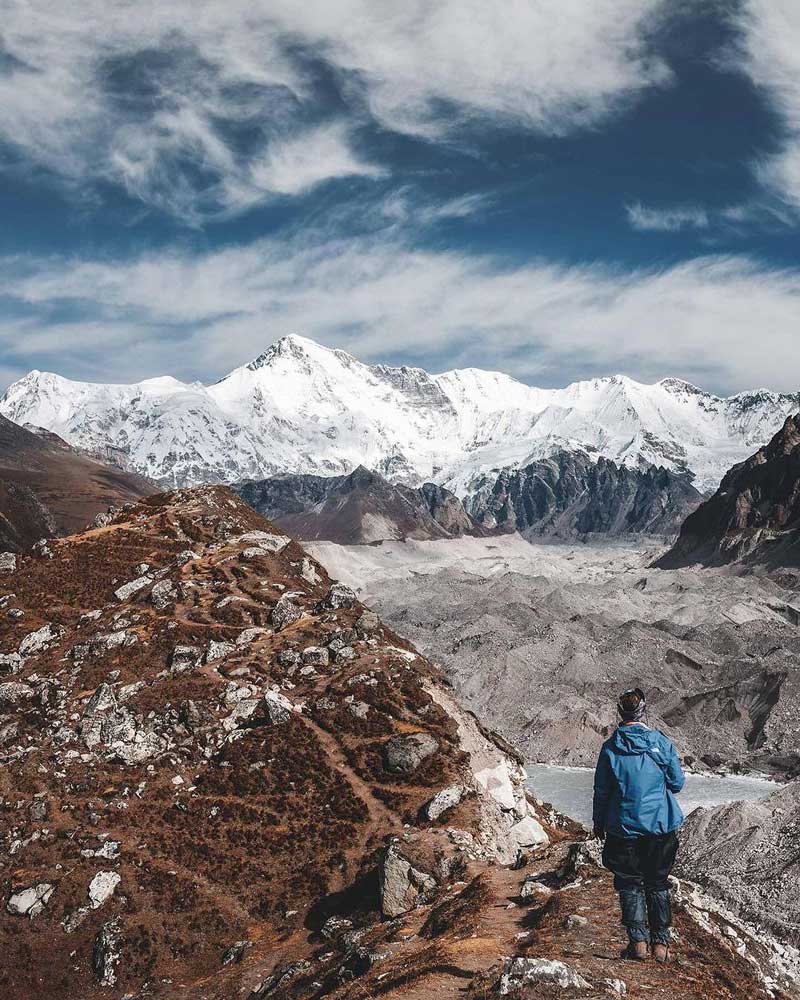
The biogas frontier
The hardest problem is human waste at high altitude, where traditional methods like deep trenches pose health and environmental risks. Biogas projects – converting collected waste into usable energy lower down the valley – are a promising long-term solution, turning a contamination hazard into clean fuel for Khumbu communities.
How trekkers and climbers can be part of the solution
Responsibility does not lie with organisations alone. Every visitor to the Khumbu shapes the mountain’s future.
Practise “pack it in, pack it out” for every wrapper and battery. Carry a reusable bottle and SteriPEN or purification tablets to avoid plastic bottles. Refill at safe-water stations rather than buying bottled water. Use teahouse toilets, not the trail. And choose an operator that runs a genuine waste-management plan – not one that quietly burns rubbish behind the lodge.
- Choose clean fuel. Operators using kerosene or gas instead of locally cut firewood reduce both deforestation and indoor air pollution.
- Carry out your batteries and electronics. These never decompose and leach toxins – bring them back to Kathmandu.
- Respect the SPCC bins. Segregate burnable, non-burnable and recyclable waste at every checkpoint.
- Support porter and Sherpa welfare. Fair loads and proper kit are part of responsible trekking – read our responsible trekking commitments.
Travellers can also contribute simply by choosing trekking companies committed to conservation – companies that prioritise clean fuel, waste segregation and porter welfare. By working together – trekkers, climbers, organisations and local Sherpa communities – the dream of reaching Everest can continue alongside the mission of protecting it.
Conclusion: a shared responsibility
The majesty of Everest beckons adventurers worldwide. But the privilege of standing in its shadow comes with a duty – to minimise our impact and keep the mountain beautiful for generations to come. Nepal has done its part by turning ethics into enforced law. The rest is up to us. By packing out all waste, choosing eco-conscious operators and respecting the SPCC’s systems, every trekker and climber contributes to a cleaner, healthier Everest. Every action counts.
Walk into the Khumbu with an NMA-certified team that packs out its waste, employs fairly paid local Sherpas, and treads lightly on the trail. Our 14-day Everest Base Camp trek is built around safe acclimatisation and low-impact practices.
View the Everest Base Camp Trek →How does climbing Everest impact the environment?
Climbers contribute to waste accumulation (food packaging, broken gear, oxygen canisters and human waste), potential air pollution from kerosene fuel, water contamination from improperly disposed human waste, and ecosystem stress from overcrowding. Each climber leaves roughly 8 kg of waste, totalling over 12,000 kg abandoned on the mountain every year.
Do EBC trekkers have to carry out their own waste like climbers?
The mandatory poop-bag rule applies to climbers above Base Camp, not to trekkers walking the Lukla–EBC route, who use teahouse toilets. However, responsible trekkers should still pack out all rubbish – wrappers, batteries and electronics – and use SPCC segregation bins along the trail. Choosing an operator with a real waste-management plan is the single most important thing a trekker can do.
What is the new poop-bag rule on Everest?
From the 2024–25 season, the Khumbu Pasang Lhamu Rural Municipality and SPCC require climbers above Base Camp to collect their human waste in official biodegradable, odour-neutralising bags and carry it back down. The bags are issued and tracked, and must be returned. The rule addresses up to ~15,000 kg of human waste produced on the upper mountain each year.
How much does it cost to climb versus trek Everest in 2026?
The Everest climbing permit rose to US$15,000 for the spring season in 2025 (US$7,500 autumn, US$3,750 off-season). Walking to Base Camp is far cheaper: EBC trekkers pay only the Sagarmatha National Park entry (~US$22) and Khumbu Pasang Lhamu Rural Municipality permit (~US$23), about US$45 combined. TIMS is not currently required on the standard route.
What are the Everest Clean Up Campaign and SPCC?
The Everest Clean Up Campaign (launched 2008) removes accumulated waste – its 2018 campaign alone collected 38,905 kg. The Sagarmatha Pollution Control Committee (established 1991) coordinates waste management, runs composting toilets and waste segregation at Base Camp, and administers the refundable garbage-deposit system for expeditions.
How can I choose a responsible Everest trekking company?
Look for NMA certification, a written waste-management plan, clean fuel (kerosene or gas rather than firewood), fair porter loads and pay, and small group sizes. Avoid operators that burn rubbish behind lodges. See our responsible trekking page and about us for how we approach low-impact guiding in the Khumbu.
Further reading: Everest region trekking guide · Everest Base Camp permits · Everest Base Camp trek cost 2026 · Altitude sickness: prevention & treatment. Official sources: DNPWC · Nepal’s Trekkers’ Information Management System (TIMS).
Private Everest departures on any date, hand-picked NMA guides, and 25+ years on these trails. Tell us your dates — we usually reply within a few hours.
Browse Everest treks & tours → Read the Everest guide →
Written by
Travel Himalaya NepalPokhara-based, NMA-certified trekking guides. We’ve led 5,000+ treks across the Annapurna and Everest regions since 1998 — every word here comes from the trail. More from this author →
Share this article
Ready to Trek?
From reading about it to standing on it
Our Pokhara-based guides have been doing this since 1998. Tell us your dates and fitness level — we'll build your perfect itinerary. Free, no obligation.
Why trek with our licensed agencyMore guides like this
Popular trips to consider
View all treks & toursFree Trekker's Insider Guide
Permits, packing lists, cost breakdowns — no fluff.
We send one useful email. You can unsubscribe anytime.