
The short version
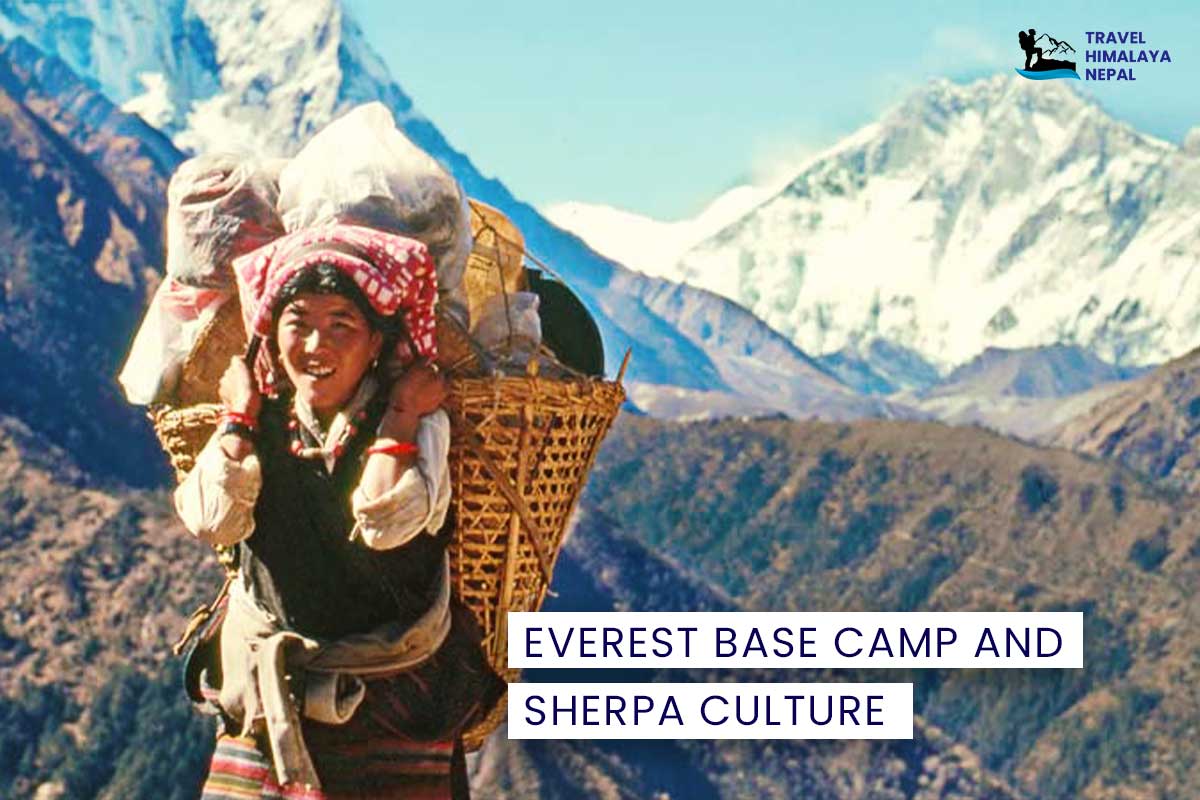
Embark on a journey beyond the breathtaking panorama of the Everest Base Camp. This trek delves into the heart of the Solukhumbu region, where the legendary Sherpa culture thrives. Witnessing their way of life amidst the majestic Himalayas offers a profound experience that goes beyond the physical challenge of the trek. Sherpa Culture: A Glimpse […]
The walk to Everest Base Camp is sold on its mountains, but anyone who has guided it for twenty-five seasons will tell you the real journey is cultural. The Khumbu is the homeland of the Sherpa people, and the trail to base camp threads through their villages, monasteries and high pastures. Understanding that living Buddhist culture is what turns a hard hike into a pilgrimage — and it costs nothing extra to do it properly.


- The Everest Base Camp trek crosses the heart of Sherpa country — Namche, Khumjung, Thame, Tengboche — where Tibetan-Buddhist culture is still lived daily.
- Base camp sits at 5,364 m; the cultural high point, Tengboche Monastery, at 3,867 m.
- Two permits are required in 2026: Sagarmatha National Park (NPR 3,000 / ~US$22) and Khumbu Pasang Lhamu Rural Municipality (NPR 3,000 / ~US$23). TIMS is no longer needed on the standard Lukla route.
- A licensed guide has been mandatory for this trek since 2023 — which also means your cultural interpreter is built in.
- Best months for both weather and festivals: March–May and September–November.
Sherpa Culture: A Glimpse into the High Himalayas
- Origin and language: The Sherpas are an ethnic group of Tibetan descent who migrated into the Khumbu around 500 years ago. Their language, Sherpa, is a dialect of Tibetan, and their faith is Nyingma (Tibetan) Buddhism.
- Deeply rooted traditions: Sherpa life is woven around Buddhist values and reverence for the mountains — Khumbila and Ama Dablam are sacred peaks, never climbed. Festivals such as Mani Rimdu fill the monasteries with masked dances and three days of public ceremony.
- Hospitality: Renowned for their warmth, Sherpas welcome trekkers into their teahouses and homes, offering a genuine window into high-altitude village life.
- Mountaineering legacy: From Tenzing Norgay's 1953 summit onward, Sherpas have been the backbone of every Everest expedition; their skill and acclimatisation are world-renowned.
Since 2023, Nepal requires every trekker in the Everest region to walk with a licensed guide. Far from a burden, this means a Sherpa or Khumbu-raised guide interprets the prayer walls, monastery etiquette and festival rituals for you in real time. Read more about the region in our Everest region guide.
The Trek: A Journey Through Sherpa Villages
- The trail: From Lukla (2,860 m) the route climbs through Phakding and Monjo to Namche Bazaar (3,440 m), the Sherpa capital, then on through Tengboche, Dingboche and Lobuche to base camp.
- Local interactions: Each village rewards a slower pace — visit working monasteries, watch wool being spun and yak trains loaded, and learn the customs that hold this community together.
- Teahouse evenings: Most nights are spent in family-run lodges. Sharing the dining-room stove over dal bhat and butter tea is where the real conversations happen.
Cultural gems along the trail
The spiritual heart of the Khumbu at 3,867 m, framed by Ama Dablam. Time your visit for morning or evening puja to hear the monks chant. It is also the venue for the Mani Rimdu festival.
The village school Sir Edmund Hillary built in 1961, and a monastery that famously displays an alleged yeti scalp. A short detour from the main trail above Namche.
An old salt-trade village and the home of many record-holding climbers, including Kami Rita Sherpa. Its hillside gompa hosts the lively Dumje festival.
Always pass mani stones and chortens on your left (clockwise). These carved mantras and fluttering flags mark the Sherpas' deep spiritual bond with the peaks.
Festivals and Celebrations
If your dates are flexible, planning around a festival transforms the trek. Autumn trekkers are best placed to catch the big one.
- Mani Rimdu: Held at Tengboche Monastery, this is the most important Sherpa festival. The full ritual cycle runs about 19 days, building to three days of public celebration with masked Cham dances, a fire puja and blessings. The dates follow the Tibetan lunar calendar (typically late October or November) — for 2026 the public days fall in late October.
- Dumje & Yarchang: Smaller spring and summer village festivals at Thame and Khumjung, with masked dances and offerings — far less touristed than Mani Rimdu.
- Losar: Tibetan New Year (February), when villages clean their homes, raise fresh prayer flags and gather for feasts.
For Mani Rimdu, book lodges in Tengboche and Deboche months ahead — the monastery courtyard and surrounding teahouses fill quickly. A standard 14-day itinerary can be nudged a day or two to land you at Tengboche for the public dances. See our 14-day Everest Base Camp trek.
Everest Region Gastronomy
- Dal bhat: Lentils, rice, seasonal vegetables and pickle — usually with free refills. The trekker's engine fuel, and the most reliably fresh meal on the trail.
- Sherpa stew (shyakpa): A hearty broth of hand-rolled noodles, potato and vegetables, perfect after a cold day above Dingboche.
- Chhurpi (yak cheese): Hard or soft cheese from nak milk — a protein-rich snack and a popular souvenir.
- Butter tea (su cha): Salty, buttery and high in calories — an acquired taste that genuinely helps at altitude.
Permits & Costs for 2026
The Khumbu is no longer covered by the TIMS card on the standard route. Two local permits apply, and your operator usually arranges both. Here is the breakdown for foreign (non-SAARC) trekkers in 2026:
| Item | 2026 cost | Where obtained |
|---|---|---|
| Sagarmatha National Park entry | NPR 3,000 (~US$22) | Kathmandu or Monjo gate |
| Khumbu Pasang Lhamu Rural Municipality permit | NPR 3,000 (~US$23) | Lukla or Monjo |
| TIMS card (standard EBC route) | Not required | — |
| Lukla flight (round trip) | ~US$440–480 | Kathmandu / Ramechhap |
| Licensed guide (mandatory) | Included in guided packages | Via registered operator |
| Full 14-day guided package | US$1,400–2,500 | Per person |
For a deeper line-by-line breakdown, see our Everest Base Camp cost guide for 2026 and the official EBC permit page. Permit fees are set by Nepal's Department of National Parks (dnpwc.gov.np).
Responsible & Respectful Trekking
- Respect the culture: Dress modestly at monasteries (covered shoulders and knees), remove hats and shoes where asked, and always ask before photographing people or interiors.
- Walk clockwise: Keep mani walls, chortens and prayer wheels on your right-hand side as you pass — spin the wheels clockwise.
- Support the community: Stay in Sherpa-owned lodges, buy local chhurpi and crafts, and tip guides and porters fairly. Our approach is detailed on our responsible trekking page.
- Cut waste: Carry a reusable bottle with purification rather than buying bottled water, which is both costly and a litter problem above Namche.
Base camp at 5,364 m is high enough that altitude sickness is the real risk on this trek, not the terrain. Build in the standard acclimatisation days at Namche (3,440 m) and Dingboche (4,410 m), ascend slowly, hydrate, and descend at once if symptoms worsen. Read our altitude sickness prevention guide before you go, and carry comprehensive insurance with helicopter evacuation cover.
Planning Your Trek
- Best time: Spring (March–May) brings rhododendron blooms and warmer nights; autumn (September–November) brings the clearest skies and Mani Rimdu. See our best time to trek Nepal 2026 guide.
- Fitness: The trek is non-technical but demands 5–7 hours of walking a day at altitude. Train with hills and back-to-back long days in the months before.
- Guide and porter: A licensed guide is mandatory; a porter (carrying ~15 kg) is optional but transforms the experience and supports local livelihoods.
Conclusion
The Everest Base Camp trek transcends its altitude profile. It is a cultural expedition through the homeland of the Sherpa people — a chance to be humbled by the Himalaya and to leave with a real understanding of the Buddhist culture that thrives in its shadow. Trek it slowly, walk it respectfully, and the Khumbu rewards you with far more than a photograph at the cairn.
What is the difficulty level of the Everest Base Camp trek?
It is rated moderate to challenging. No technical climbing is involved, but the high altitude — base camp sits at 5,364 m — and 5–7 hour walking days at altitude demand a good level of fitness and proper acclimatisation.
Do I need a guide for the Everest Base Camp trek in 2026?
Yes. Since 2023, Nepal requires all trekkers in the Everest region to be accompanied by a licensed guide booked through a registered operator. Beyond the legal requirement, a Khumbu-raised guide is your interpreter for the area's Sherpa culture, monasteries and festivals.
What permits do I need and how much do they cost?
Two: the Sagarmatha National Park entry permit (NPR 3,000, ~US$22) and the Khumbu Pasang Lhamu Rural Municipality permit (NPR 3,000, ~US$23). The TIMS card is no longer required on the standard Lukla–EBC route. Most operators arrange both for you.
When is the Mani Rimdu festival, and can I plan my trek around it?
Mani Rimdu is held at Tengboche Monastery each autumn. The full ritual cycle runs about 19 days, peaking in three days of public masked dances; the dates follow the Tibetan lunar calendar (usually late October or November). Yes — an autumn itinerary can be timed to put you at Tengboche for the public ceremonies, but book Tengboche/Deboche lodges well in advance.
How can I be respectful of Sherpa culture on the trail?
Dress modestly at religious sites, remove hats and shoes where asked, and seek permission before photographing people or monastery interiors. Always pass mani walls and chortens on your right (clockwise), and learn a few words of greeting. Staying in Sherpa-owned lodges and buying local supports the community directly.
What is the best time of year for the cultural side of the trek?
Autumn (September–November) offers the clearest mountain views and the Mani Rimdu festival, making it ideal for culture. Spring (March–May) is warmer and quieter at the monasteries but still rich in village life.
Our 14-day Everest Base Camp trek is led by licensed Khumbu guides, with the acclimatisation days and monastery time built in to do the culture justice.
View the 14-day Everest Base Camp trek →Private Everest departures on any date, hand-picked NMA guides, and 25+ years on these trails. Tell us your dates — we usually reply within a few hours.
Browse Everest treks & tours → Read the Everest guide →
Written by
Travel Himalaya NepalPokhara-based, NMA-certified trekking guides. We’ve led 5,000+ treks across the Annapurna and Everest regions since 1998 — every word here comes from the trail. More from this author →
Share this article
Ready to Trek?
From reading about it to standing on it
Our Pokhara-based guides have been doing this since 1998. Tell us your dates and fitness level — we'll build your perfect itinerary. Free, no obligation.
Why trek with our licensed agencyMore guides like this
Popular trips to consider
View all treks & toursFree Trekker's Insider Guide
Permits, packing lists, cost breakdowns — no fluff.
We send one useful email. You can unsubscribe anytime.