
The short version
The Annapurna Circuit trek in Nepal continues to be a magnet for adventure travelers, with a record-breaking 177,182 foreign tourists visiting the region in the past 10 months (as of May 2024). This surge in popularity signifies a significant return to pre-pandemic levels and highlights the enduring allure of this world-renowned trekking route. This blog […]
When 177,182 foreign trekkers walked into the Annapurna region in the first ten months of 2024, it felt like a record that would stand for years. It didn't. By October 2025 the Annapurna Conservation Area had logged 246,575 foreign visitors in just ten months — closing the year at a historic 299,831, the largest annual figure ever recorded. The Annapurna Circuit isn't just back to pre-pandemic levels; it has comfortably overtaken them. Here is what the numbers really tell us, and how to plan your own crossing of Thorong La with the crowds in mind.
- The record keeps breaking. 177,182 trekkers (10 months of 2024) was beaten by 246,575 in the same window of 2025, and a full-year high of 299,831.
- Spring and autumn dominate. April 2025 alone drew 44,763 arrivals; January, the quietest month, just 9,359.
- It's a guided trek now. Since April 2023 foreigners must trek with a licensed guide in the Annapurna Conservation Area — solo trekking is no longer permitted.
- Permit is simple: one ACAP at NPR 3,000 (about US$25). The old TIMS card is no longer enforced at Annapurna checkpoints.
- Plan 10–18 days around a 160–230km loop topping out at Thorong La, 5,416m.
Why the Annapurna numbers keep breaking records
The 177,000 figure from 2024 was a strong post-pandemic rebound. The 2025 numbers are something else entirely — a region that has decisively returned to growth. Annapurna Conservation Area Project (ACAP) data shows just 18,836 foreign visitors in 2020, recovering to 191,666 by 2023, then 244,045 across all of 2024, before 2025 smashed the ceiling. Several forces are pulling trekkers back to this trail in particular.
Travellers who deferred bucket-list trips for years are finally booking. The Circuit's reputation as one of the world's classic long-distance treks makes it a natural first choice.
Continuous upgrades to lodges, bridges and the road network inside ACAP have made the loop more comfortable and more flexible to shorten.
Years of magazine lists, films and social media have kept the Circuit at the top of the rankings, driving steady interest from Europe, North America and East Asia.
Add-ons like Tilicho Lake or a shorter 10–13 day line let trekkers of different fitness levels build a trip that fits, widening the appeal.
Of 2025's January–October arrivals, 146,968 came from South Asian (SAARC) countries and 99,607 from the rest of the world — so the trail is less Western-dominated than many trekkers expect, especially in shoulder months.
What the Annapurna Circuit actually involves
The classic Annapurna Circuit is a circular route of roughly 160–230km depending on how much of the lower road sections you walk or jeep, traversing the Annapurna massif in central Nepal. Most trekkers take 10–18 days, with the high point being the crossing of Thorong La (5,416m / 17,769ft). Our most popular line is the 10-day Annapurna Circuit Trek, which uses local transport on the lower stretches to focus your walking days on the spectacular high country.
- Dramatic change of landscape: from subtropical valleys and waterfalls to the high, arid, Tibetan-influenced terrain around Manang and Muktinath — few treks anywhere shift scenery so completely.
- Living culture: Gurung and Manangi villages, and the sacred pilgrimage site of Muktinath, revered by both Hindus and Buddhists.
- Real altitude: the slow climb to Thorong La is a serious acclimatisation challenge, not a technical climb — respect the schedule and the pass is achievable for fit trekkers.
- Teahouse comfort: well-run lodges the whole way, so you carry a light pack and sleep under a roof every night.
For the full regional picture — sister treks, seasons and side trips — see our Annapurna region guide.
The 2026 rules you need to know before you book
The biggest change since this trail's earlier boom years is regulatory, and it directly shaped how today's record numbers are guided onto the trail.
Since 1 April 2023, foreign trekkers must be accompanied by a government-licensed guide in Nepal's conservation areas and national parks, including the Annapurna Conservation Area. Checkpoints verify your guide and permit; being caught without one can mean fines or being turned back. Every Travel Himalaya Nepal departure includes an NMA-certified guide as standard.
Permits and costs at a glance
| Item | Foreigner | SAARC nationals | Where |
|---|---|---|---|
| ACAP permit | NPR 3,000 (~US$25) | NPR 1,000 | NTB / TAAN, Kathmandu or Pokhara |
| TIMS card | No longer enforced at Annapurna checkpoints | — | — |
| Licensed guide | Mandatory | Mandatory | Via a registered agency |
| Tourist visa (on arrival) | From US$30 (15 days) | Free for most | Airport / online |
On a guided trip your agency arranges the ACAP for you, so the only out-of-pocket admin you typically handle yourself is your Nepal tourist visa. See our ACAP & TIMS deep guide for the current process, and read up on the prevention of altitude sickness before any high crossing.
With April peaking near 45,000 arrivals, the busiest beds book out months ahead. Late September to early October and late April offer the same clear skies with thinner crowds. If you want the high passes to yourself, ask us about early-morning Thorong La starts and quieter alternate teahouses. Our best time to trek Nepal in 2026 guide breaks the seasons down month by month.
Planning your own crossing
- Best seasons: spring (March–May) and autumn (September–November) for clear skies, stable weather and open passes. April brings rhododendron bloom; October is the autumn classic.
- Fitness: you need solid aerobic endurance for long days and the climb to 5,416m — train hills and back-to-back walking days in the months before.
- Acclimatisation: build in rest days at Manang. Don't cut the schedule short to "save time" — the slower line is what gets people safely over Thorong La.
- Itinerary length: the 10-day Circuit suits most fit trekkers; add days for the 17-day route via Tilicho Lake if you want the highest sapphire lake on earth in your trip.
How many tourists trek the Annapurna region each year?
A record 299,831 foreign visitors entered the Annapurna Conservation Area in 2025 — the highest annual figure ever recorded. The January–October total alone was 246,575, beating the 177,182 logged in the same ten-month window of 2024.
Can I trek the Annapurna Circuit solo in 2026?
No. Since April 2023, foreign trekkers must be accompanied by a licensed guide in Nepal's conservation areas, including Annapurna. Solo trekking is no longer permitted, and checkpoints verify your guide. Every Travel Himalaya Nepal trip includes a certified guide.
What permits do I need for the Annapurna Circuit?
You need the Annapurna Conservation Area Permit (ACAP), NPR 3,000 (about US$25) for foreigners. The old TIMS card is no longer enforced at Annapurna checkpoints. On a guided trip the agency arranges your ACAP for you.
How high is Thorong La and is it dangerous?
Thorong La sits at 5,416m (17,769ft), the high point of the Circuit. It is not a technical climb but the altitude is serious. With proper acclimatisation — rest days at Manang and a steady ascent — it is achievable for fit, well-prepared trekkers.
When is the best time to trek the Annapurna Circuit?
Spring (March–May) and autumn (September–November) offer the clearest skies and most stable weather. April is the single busiest month; late September and late April give similar conditions with thinner crowds.
How long does the Annapurna Circuit take?
Most trekkers take 10–18 days over a 160–230km loop. Our 10-day itinerary uses local transport on the lower road sections to concentrate the walking on the scenic high country; longer versions add Tilicho Lake.
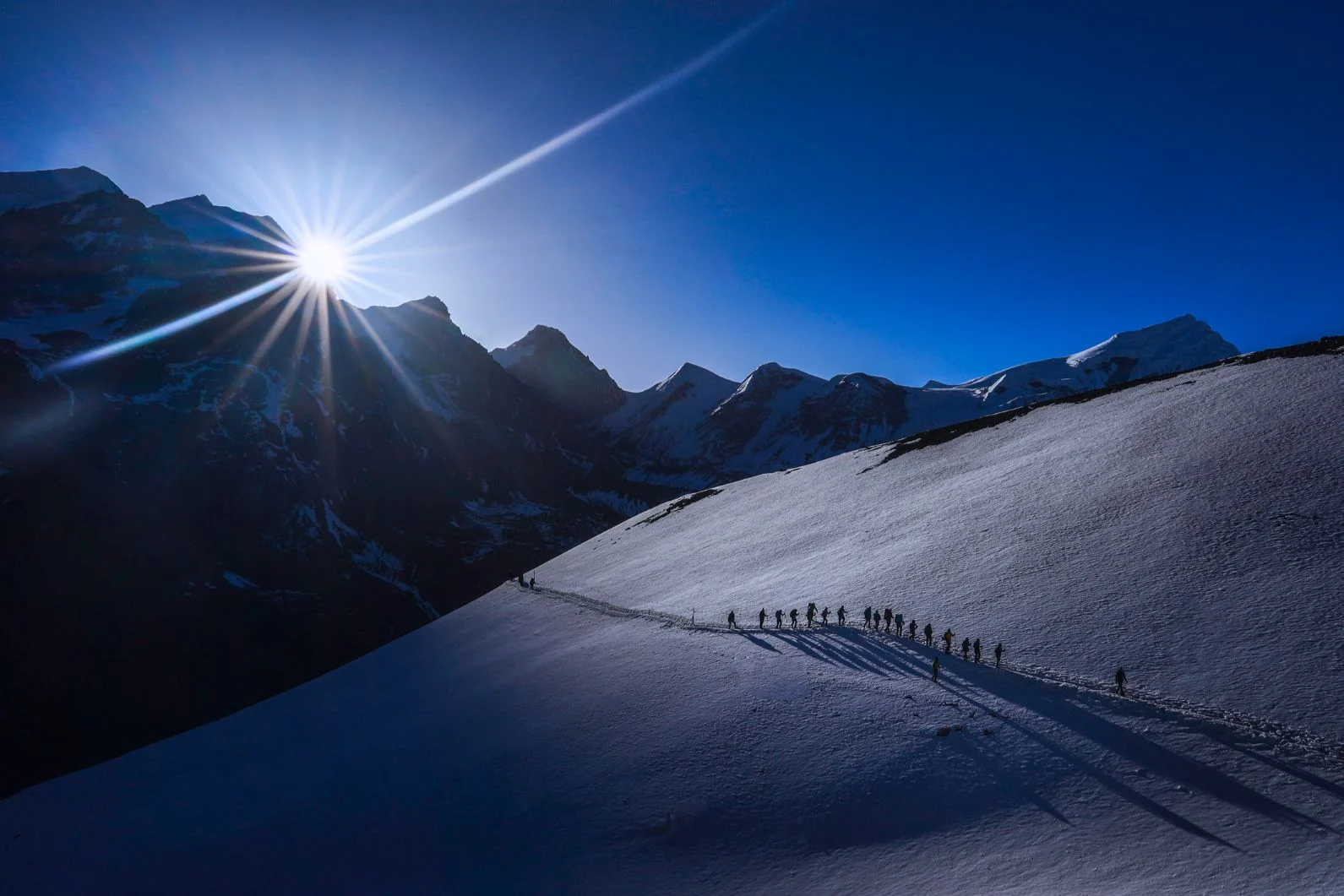
Join a small-group, fully guided Annapurna Circuit with an NMA-certified team that has run this route since 1998 — 5,000+ treks, zero fatalities. We handle permits, teahouses and acclimatisation so you focus on the mountains.
Plan your Annapurna Circuit →For official permit fees and conservation-area rules, see the DNPWC / ACAP and Nepal Tourism Board websites, and browse every route in our Annapurna region guide.
Featured image: travelwayoflife via Wikimedia Commons (CC BY-SA 2.0).

Written by
Travel Himalaya Nepal
Pokhara-based, NMA-certified trekking guides. We’ve led 5,000+ treks across the Annapurna and Everest regions since 1998 — every word here comes from the trail. Meet the team →
Share this article
Ready to Trek?
From reading about it to standing on it
Our Pokhara-based guides have been doing this since 1998. Tell us your dates and fitness level — we'll build your perfect itinerary. Free, no obligation.
Popular treks to consider
Free Trekker's Insider Guide
Permits, packing lists, cost breakdowns — no fluff.
We send one useful email. You can unsubscribe anytime.